


At HHH, it is our mission to:
-Create HARMONY, improve HEALTH and encourage HEALING of the physical body & the mind through massage therapy and high-quality holistic services.
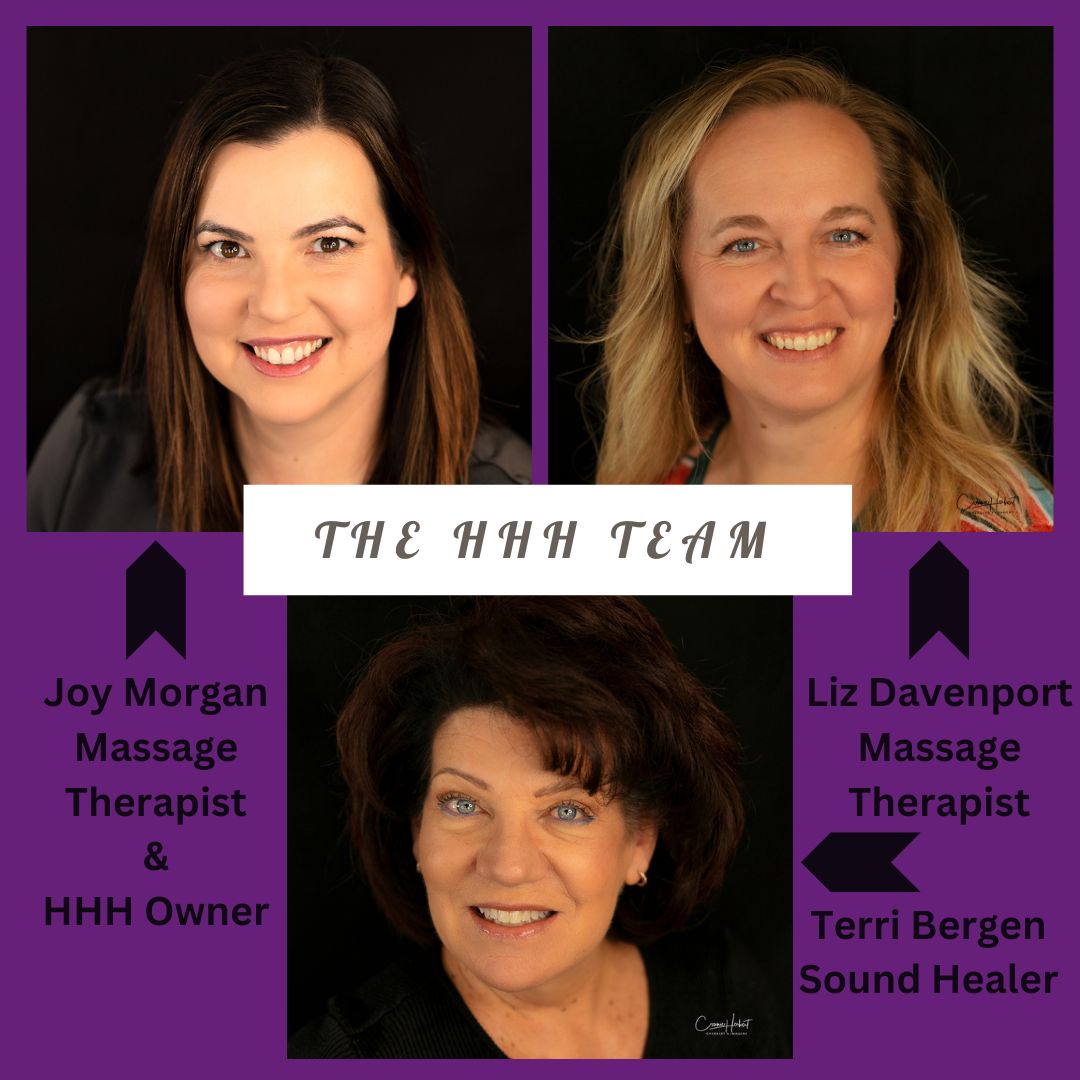
We have 2 Massage therapist here at HHH. Joy Morgan (the owner) and Liz Davenport. Plus, for the 1st time we have a Certified Sound therapist, Terri Bergen.
Be sure to check the staff page on our online scheduling software for the next available appointment.
We also have the Therapy Room available daily. It offers Red Light Therapy, Infrared Sauna and an Electric massage chair.
-Create HARMONY, improve HEALTH and encourage HEALING of the physical body & the mind through massage therapy and high-quality holistic services.
We have 2 Massage therapist here at HHH. Joy Morgan (the owner) and Liz Davenport. Plus, for the 1st time we have a Certified Sound therapist, Terri Bergen.
Be sure to check the staff page on our online scheduling software for the next available appointment.
We also have the Therapy Room available daily. It offers Red Light Therapy, Infrared Sauna and an Electric massage chair.
Brand New to the Mini Cassia
Watsu Sessions
What is Watsu?
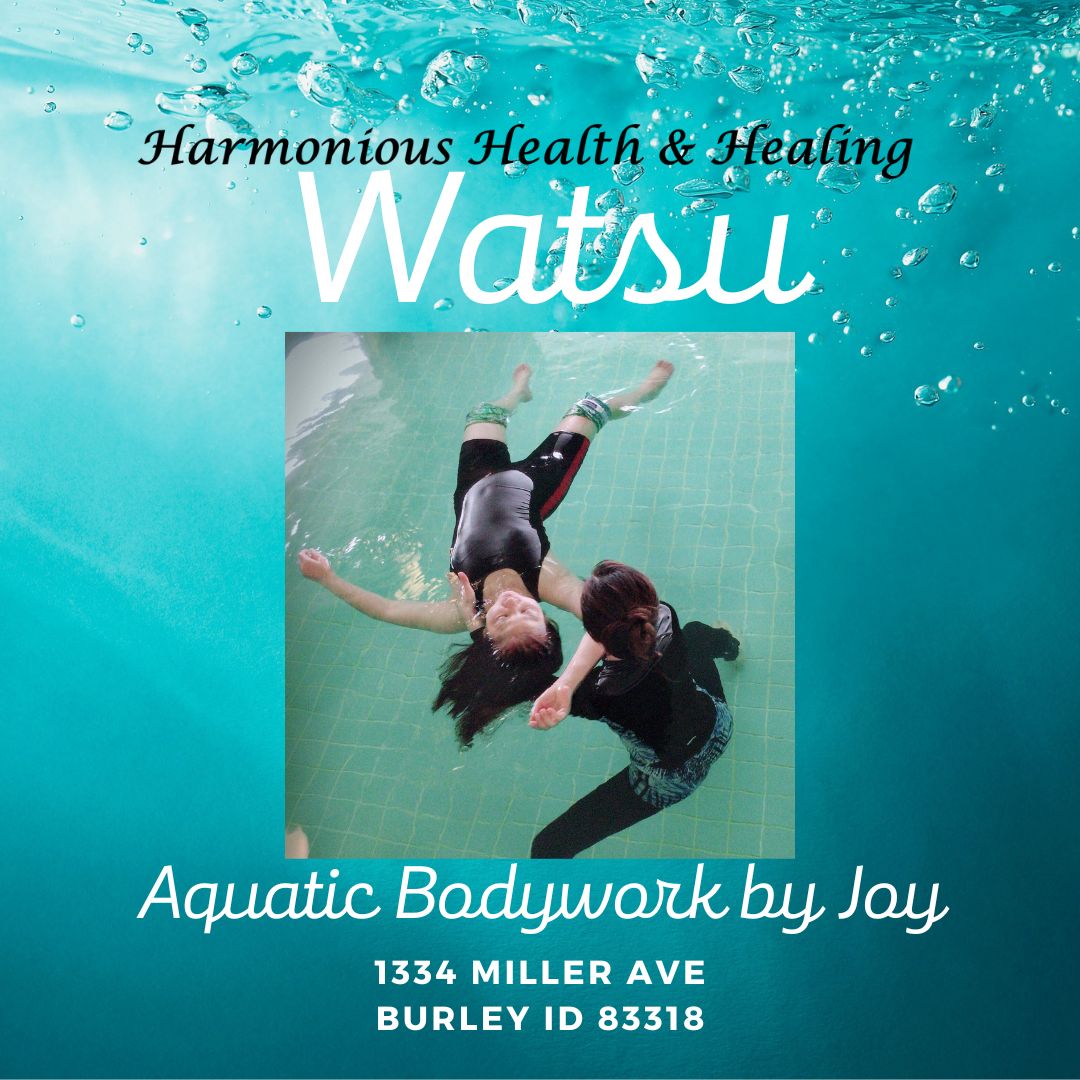
Watsu is a form of aquatic bodywork used for deep relaxation and passive aquatic therapy. It involves stretches, massages, and acupressure in warm water. The term Watsu comes from the words “water” and “shiatsu.” Shiatsu is a type of traditional Japanese massage that uses acupressure to promote relaxation, in Japanese, shiatsu means “finger pressure.”
What is Watsu used for?
The working premise of Watsu is that water takes weight off the vertebrae so they can be manipulated more easily. Watsu is also said to help decrease muscle tension and promote a deep state of relaxation. It has been shown to increase mobility and flexibility, decrease stress, reduce pain, and promote better sleep. Health concerns that have been successfully treated by Watsu include injury to the spinal cord or brain through trauma, stroke, or a degenerative condition such as Parkinson’s Disease; arthritis, back and neck pain, fibromyalgia, and other chronic pain states; and mood disorders such as generalized anxiety and post-traumatic stress disorder. Watsu has also benefited patients who have undergone surgery and have subsequently developed post-operative pain or limited range of motion.
What should one expect on a visit to a practitioner of Watsu?
A typical Watsu session is performed in water that is 94-96 degrees Fahrenheit and involves a series of movements that the practitioner performs with one hand as he or she balances the recipient with the other. Expect to be gently rocked, stretched, turned, bent, and arched.
Being held and manipulated while floating in water can be a profound experience. Deep states of relaxation can be achieved, especially if a level of connection and trust is reached between patient and practitioner. Watsu practitioners are trained to simply “be” with someone as they experience this kind of emotional response. Watsu advocates say that by the end of a session, the state of deep relaxation and harmony, along with the connection felt during Watsu, can create a transformational opportunity for clients to deal with their issues.
Watsu is a form of aquatic bodywork used for deep relaxation and passive aquatic therapy. It involves stretches, massages, and acupressure in warm water. The term Watsu comes from the words “water” and “shiatsu.” Shiatsu is a type of traditional Japanese massage that uses acupressure to promote relaxation, in Japanese, shiatsu means “finger pressure.”
What is Watsu used for?
The working premise of Watsu is that water takes weight off the vertebrae so they can be manipulated more easily. Watsu is also said to help decrease muscle tension and promote a deep state of relaxation. It has been shown to increase mobility and flexibility, decrease stress, reduce pain, and promote better sleep. Health concerns that have been successfully treated by Watsu include injury to the spinal cord or brain through trauma, stroke, or a degenerative condition such as Parkinson’s Disease; arthritis, back and neck pain, fibromyalgia, and other chronic pain states; and mood disorders such as generalized anxiety and post-traumatic stress disorder. Watsu has also benefited patients who have undergone surgery and have subsequently developed post-operative pain or limited range of motion.
What should one expect on a visit to a practitioner of Watsu?
A typical Watsu session is performed in water that is 94-96 degrees Fahrenheit and involves a series of movements that the practitioner performs with one hand as he or she balances the recipient with the other. Expect to be gently rocked, stretched, turned, bent, and arched.
Being held and manipulated while floating in water can be a profound experience. Deep states of relaxation can be achieved, especially if a level of connection and trust is reached between patient and practitioner. Watsu practitioners are trained to simply “be” with someone as they experience this kind of emotional response. Watsu advocates say that by the end of a session, the state of deep relaxation and harmony, along with the connection felt during Watsu, can create a transformational opportunity for clients to deal with their issues.
TMJ Massage Specialist
Intra-oral TMJ Massage
(Temporomandibular Joint)
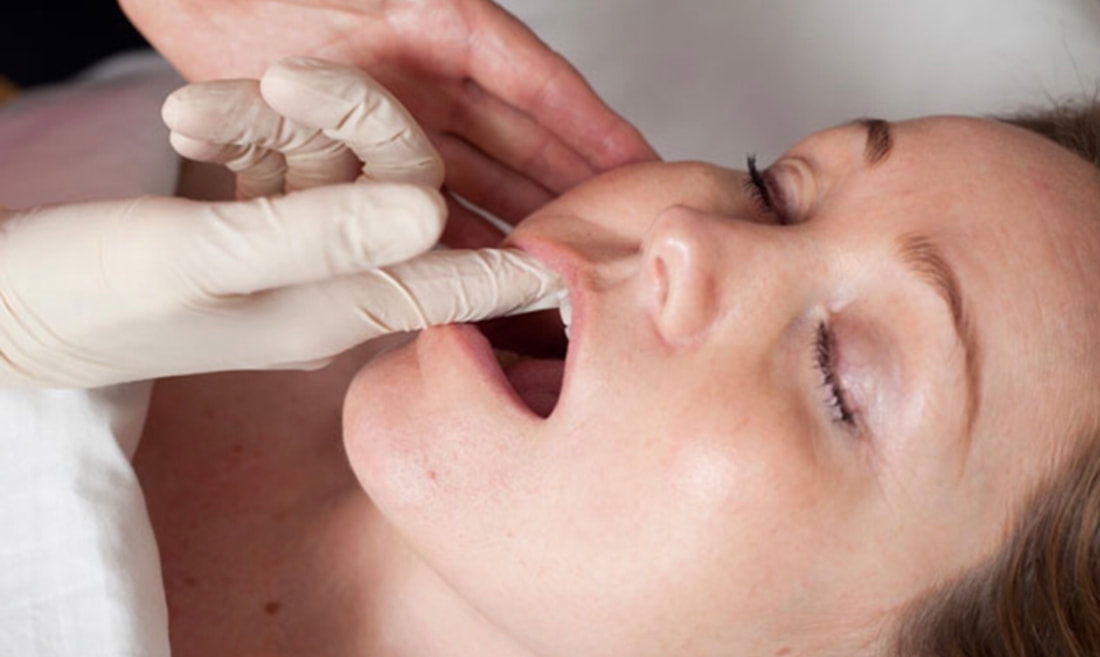
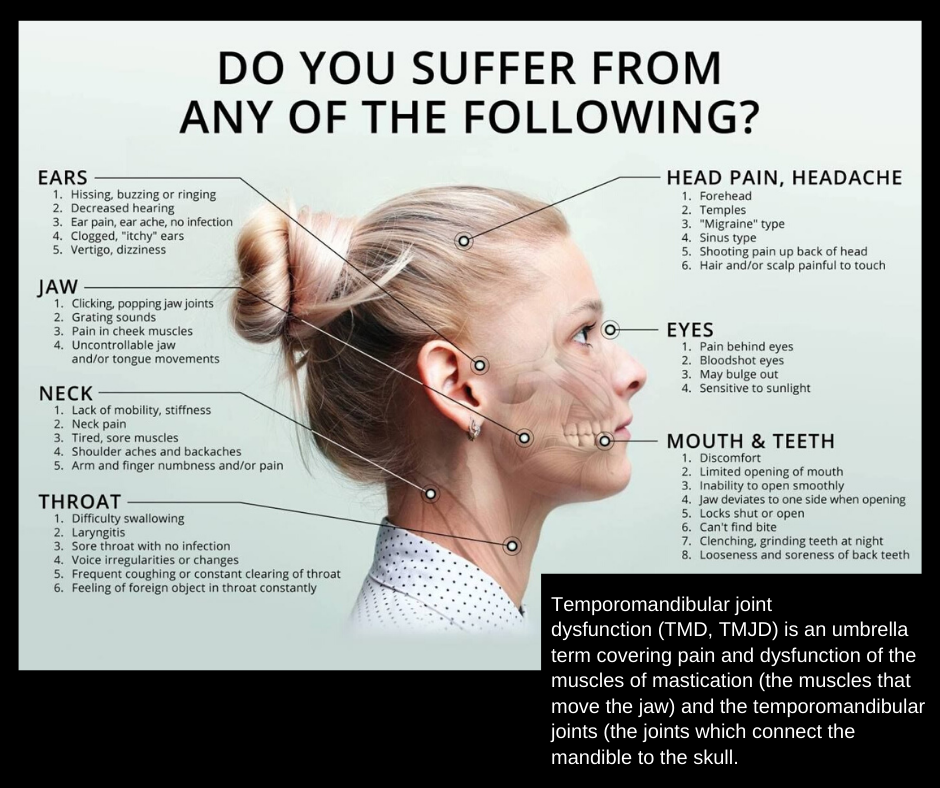
Intra-Oral TMJ is only offered by Joy Morgan, currently. To schedule a TMJ Massage requires an old-fashioned phone call to Joy.
What is a TMJ Disorder?
Temporomandibular joint disorders, more commonly known as TMJ, are usually the result of inflamed and painful chewing muscles around your jaw. For some, it's a once-in-a-while issue that can come from too much chewing, like indulging in a piece of gum all afternoon. For others, however, TMJ disorder can be a chronic issue that results in constant pain and discomfort.
The cause for this chronic condition is relatively subjective, but may be linked to stress fractures, an imperfect bite, tooth grinding, whiplashes/trauma to the head or neck, or tooth clenching related to stress. Luckily, a TMJ massage can act as an effective, non-medicinal way to deal with TMJ pain.
What is a TMJ Disorder?
Temporomandibular joint disorders, more commonly known as TMJ, are usually the result of inflamed and painful chewing muscles around your jaw. For some, it's a once-in-a-while issue that can come from too much chewing, like indulging in a piece of gum all afternoon. For others, however, TMJ disorder can be a chronic issue that results in constant pain and discomfort.
The cause for this chronic condition is relatively subjective, but may be linked to stress fractures, an imperfect bite, tooth grinding, whiplashes/trauma to the head or neck, or tooth clenching related to stress. Luckily, a TMJ massage can act as an effective, non-medicinal way to deal with TMJ pain.
TMJ Intra-oral massage is a modality I specialize in. Intra-oral just means, I massage the muscles on the INSIDE of your mouth while wearing gloves. The benefits of massage therapy when focused around the muscles of mastication (chewing muscles), is a very effective way to decrease symptoms of pain in the jaw, joint clicking and increase range of motion and circulation to the muscle tissue. In addition, I massage all of the surrounding areas that effect the TMJ such as: neck, face, head, chest and back. I use active isolated stretching to maximize the results. Typically, a treatment can involve in inside and outside of the mouth, neck, face, and upper back. To accomplish ideal results, I recommend at least a one-hour session for 4 weeks in a row.
Therapeutic Massage Therapy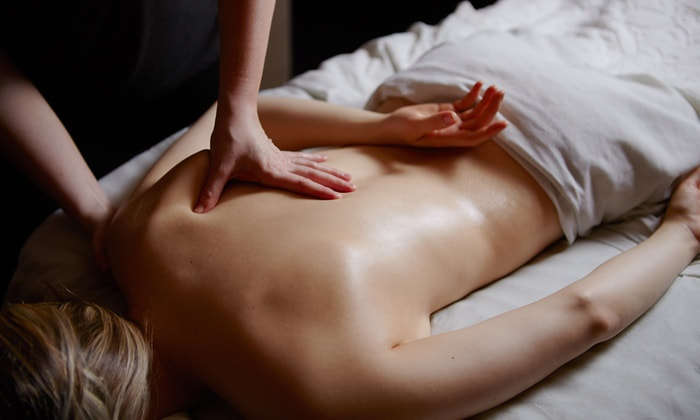
What is a Therapeutic Massage? Therapeutic massage is a mixture of techniques such as:
Deep Tissue Deep tissue massage is a massage technique that’s mainly used to treat musculoskeletal issues, such as strains and sports injuries. It involves applying sustained pressure using slow, deep strokes to target the inner layers of your muscles and connective tissues. This helps to break up scar tissue that forms following an injury and reduce tension in muscle and tissue. It may also promote faster healing by increasing blood flow and reducing inflammation. Deep tissue massage offers both physical and psychological benefits. Unlike other massage techniques that focus on relaxation, deep tissue massage helps to treat muscle pain and improve stiffness. But it can still help to you unwind mentally, too. The AIS Technique Performing an Active Isolated Stretch of no longer than two seconds allows the target muscles to optimally lengthen without triggering the protective stretch reflex and subsequent reciprocal antagonistic muscle contraction as the isolated muscle achieves a state of relaxation. These stretches provide maximum benefit and can be accomplished without opposing tension or resulting trauma. Myofascial Release Achieve Optimal Flexibility Aaron Mattes' myofascial release technique, which also incorporates Active Isolated Stretching, uses active movement and reciprocal inhibition to achieve optimal flexibility. Using a 2.0 second stretch has proven to be the key in avoiding reflexive contraction of the antagonistic muscle. Without activating muscle group contraction, restoration of full range of motion and flexibility can be successfully achieved. |
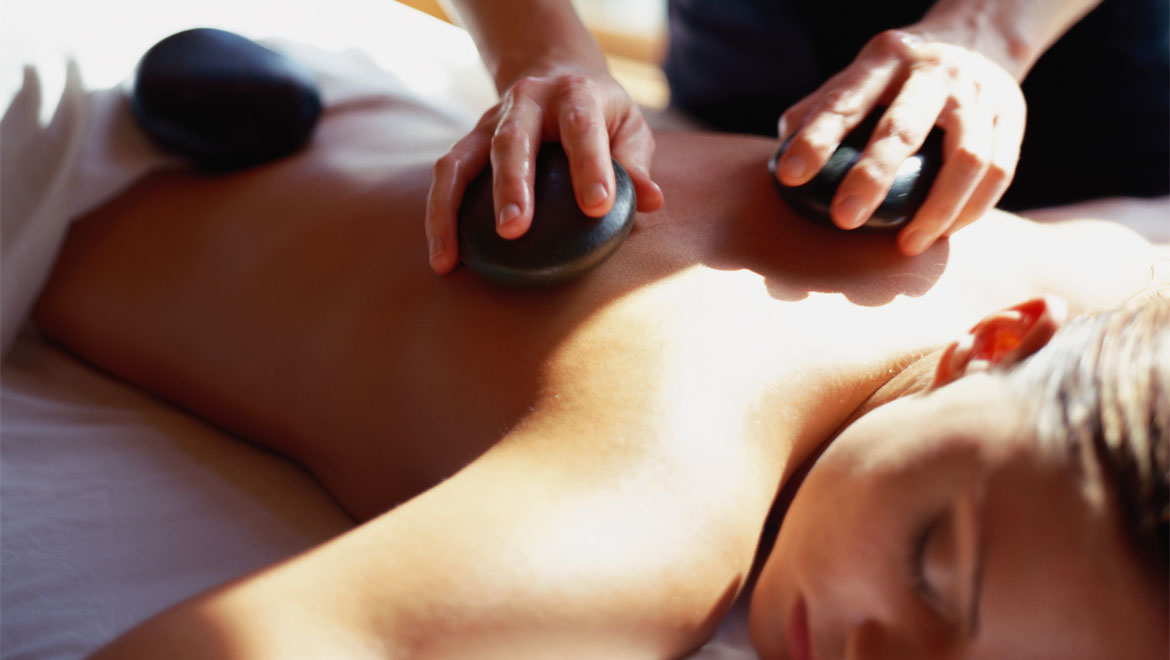
Healing Hot Stones
|

|
Upcoming Events |
1334 Miller Ave
|
Check back often for upcoming events or specials!
All new to the Mini cassia, WATSU, August 2023
Price Update August 1st, 2023
Location:
Best Western Plus Burley Inn & Convention Center 800 N Overland Ave, Burley, ID 83318 |
Maggie
/
- 1
- 2
- 3
- 4
- 5
Joy does amazing work. She is very sensitive to the needs of her client and focuses on their reaction as she is working so she does not apply too much pressure, but gives enough pressure to stimulate the muscle tissues to beneficial effect. Joy is very professional, but makes the client feel at ease and very comfortable. During the massage she checks to make sure the client is having a good experience. Overall I would say that Joy Morgan gives the best massage I have ever experienced and I would high recommend her to anyone who is in need of an experienced, professional and highly skilled therapist.
/
- 1
- 2
- 3
- 4
- 5
Joe
/
- 1
- 2
- 3
- 4
- 5
Everything was great!
/
- 1
- 2
- 3
- 4
- 5
Connie
/
- 1
- 2
- 3
- 4
- 5
Joy seems to have a great knowledge of the muscle structure and does a wonderful job getting my tight muscles to relax.
/
- 1
- 2
- 3
- 4
- 5
Pauline
/
- 1
- 2
- 3
- 4
- 5
I absolutely love Joy! She is competent and and thorough. I highly recommend her services!
/
- 1
- 2
- 3
- 4
- 5
Faye
/
- 1
- 2
- 3
- 4
- 5
I liked everything that was done. Very relaxing.
/
- 1
- 2
- 3
- 4
- 5
- 0
- 1
- 2
- 3
- 4